What happens in your first yoga class? A beginner yoga class is a slow, guided session where a teacher talks you through simple postures and steady breathing at your own pace. Yoga for beginners asks for no fitness, flexibility, or experience. You wear comfortable clothes, work barefoot on a mat, and the teacher gives you an easier version of every pose. Nothing about it is a test.
Around 14% of adults in England now practise yoga or Pilates, according to Sport England’s Active Lives survey, yet almost every one of them was once exactly where you are: curious, a little nervous, and quietly convinced everyone else in the room would be bendier and fitter. This guide is the honest version, built from fresh research and fourteen years of teaching beginners in Omagh. It covers what actually happens in a first class, which style to pick, what the evidence really says, what changes over your first eight weeks, and the mistakes worth avoiding, so you walk in knowing what to expect.
| Class length | 45 to 75 minutes |
|---|---|
| Level | Complete beginners welcome, no experience needed |
| Fitness required | None to start; you set the effort |
| Typical UK cost | About £10 to £16 a class; intro offers often lower |
| What to bring | Water and a light layer; mats are provided |
| Best first styles | Hatha, Restorative, Yin or a dedicated beginner class |
What a Beginner Yoga Class Is Really Like
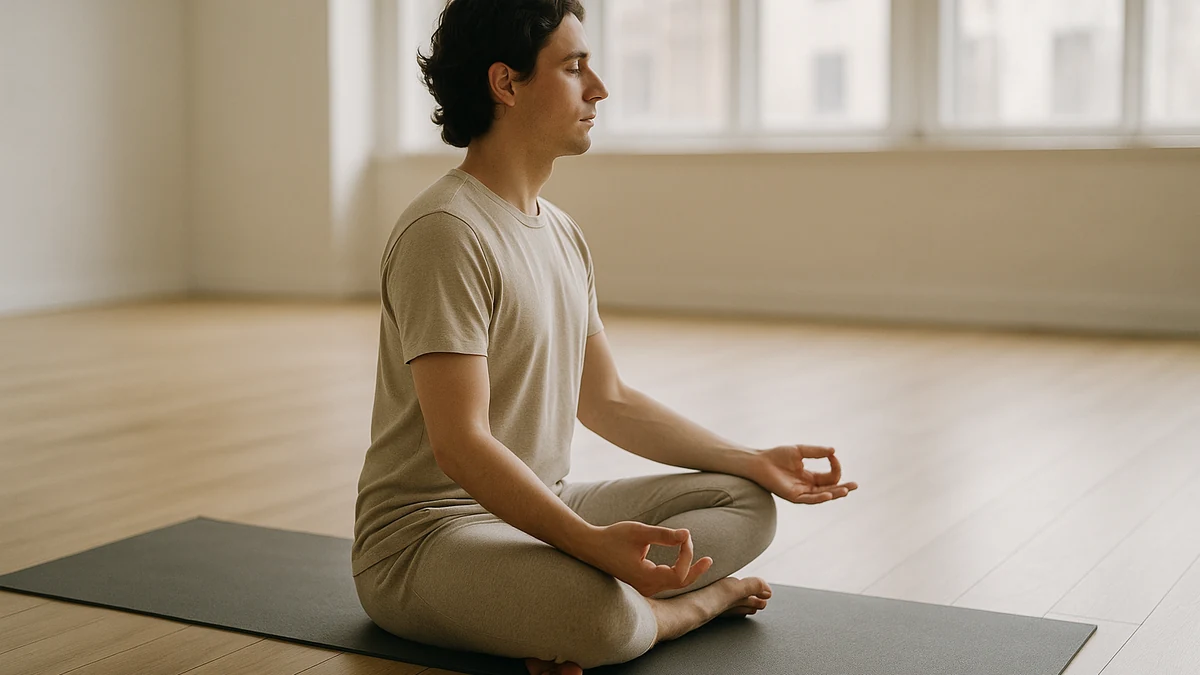
A good beginner class is built around foundations, not performance. You learn a handful of shapes well rather than rushing through forty, and the teacher offers an easier version of anything that does not suit your body that day. It moves slowly and holds poses long enough to understand them. The only real mistake a first-timer can make is comparing themselves to the person on the next mat.
At Orba, our studio sits in nine acres of countryside at the foot of the Sperrin Mountains, a few minutes from Omagh town centre. Classes are kept small and personal, so I can actually see each person and help, which is the whole point of learning in a room rather than from a screen. A typical first class follows a simple, predictable arc:
- Arrive and settle. Come a few minutes early, roll out a mat, and sit or lie down while the class gathers.
- Breathe. The class opens with slow breathing to settle the nervous system before any movement.
- Gentle standing poses. Simple, stable shapes warm the legs and spine.
- A balance or two. Expect a wobble and a laugh; balancing is a skill, not a test.
- Seated stretches. Slower floor shapes release the hips and back.
- Rest. A few minutes lying quietly, which sounds odd until you feel how good it is.
What beginners actually find hard (and why it fades)
The honest part most guides skip is what beginners genuinely find hard, and none of it is the flexibility they worry about. In a first class, the things I watch people wrestle with are almost always the same: holding the breath the moment a pose gets harder, wobbling in standing balances, tight hips and hamstrings that limit how far a shape goes, and the strong pull to force a pose so it “looks correct” rather than resting when the body asks. Every one of those eases within a few sessions. Knowing they are coming takes most of the fear out of the first class.
Which Style of Yoga Should a Beginner Choose?
“Yoga” is not one thing, and picking the wrong style for a first class is a common reason people decide yoga for beginners is “not for them”. The names below all describe genuinely different experiences. For a first-ever class, slower and calmer wins: a dedicated beginner class, Hatha, Restorative or Yin. The faster and hotter styles are worth trying later, once the shapes feel familiar.
| Style | Pace and intensity | Good first class? |
|---|---|---|
| Hatha | Slow and steady, longer holds, fewer transitions | Yes, ideal |
| Restorative | Extremely gentle, supported poses, lots of rest | Yes, gentlest entry |
| Yin | Very slow, long passive floor holds | Yes, if you like stillness |
| Vinyasa | Moderate to fast, poses flow with the breath | Manageable, can feel busy at first |
| Ashtanga | Fast, athletic, fixed repeating sequence | Better once you have a base |
| Hot / Bikram | Demanding, heated room adds real load | Not for a first class |
If a timetable does not say “beginner”, a Hatha class is almost always a safe first choice. When you book anything at Orba you are welcome to tell us you are new and we will point you to the right session rather than dropping you into a fast flow on day one.
You Do Not Need to Be Flexible or Fit to Start
This is where most people talk themselves out of yoga, and the evidence quietly disagrees with them. Yoga for beginners is one of the few activities genuinely suited to people who are unfit, stiff, nervous, or returning to movement after years away. You set the effort. The teacher gives you gentler options. You build strength and mobility gradually rather than all at once.
What the evidence says about yoga for beginners
The health case is solid and, importantly, honest rather than hyped. The NHS is clear that regular physical activity can improve sleep and energy, lower stress, and reduce the risk of falls in older adults, and it lists yoga as one way to get there. Reviews that look specifically at yoga point the same way, with modest, believable effect sizes rather than miracles:
- Stress and anxiety: a 2020 review of 12 studies (672 people) found lower perceived stress across every study, and a meta-analysis found a small reduction in anxiety versus no treatment.
- Balance: in a review of balance studies, 11 of 15 showed improvement, and a later meta-analysis in older adults found a notable balance gain (effect size 0.81).
- Strength and flexibility: a 2025 meta-analysis in community-dwelling older adults found meaningful gains in muscle strength (effect size 0.49) and flexibility (0.38).
- Sleep: across several studies yoga has helped sleep quality, though it is a support, not a cure for insomnia.
Read those the right way: the numbers are small to moderate, not magic, and that is exactly why yoga tends to stick. A beginner class quietly works on four things at once, so bodyweight holds build strength, single-leg shapes train balance, gentle mobility eases everyday stiffness, and the slow breath-led pace lowers stress. You do not have to chase any of it. It arrives as a side effect of turning up. Sources: NHS on the health benefits of exercise and the NCCIH review of yoga effectiveness and safety.
What Changes in Your First Eight Weeks
Progress in yoga for beginners is real but gradual, and it rarely looks like the flashy poses online. Breath and confidence shift first; visible strength and flexibility take longer. Here is a realistic, honest picture of a beginner practising once or twice a week, drawn from what I see in the studio:
| Stage | What typically changes |
|---|---|
| Weeks 1 to 2 | Breath awareness improves first: you move from holding your breath to using it to pace each pose. You learn a few pose names and get through a class without feeling lost. |
| Weeks 3 to 4 | Breathing steadies through simple flows. Shoulders, wrists, hips and core tolerate poses a little longer, and you start modifying without panicking. |
| Weeks 5 to 6 | Breath and movement link more smoothly. Standing balances feel steadier, planks shake less, and folds and lunges open up in a few predictable places. |
| Weeks 7 to 8 | Breathing stays calmer through a whole class. Holds are more stable, and the flexibility gains start showing up in everyday movement, not just on the mat. |
The honest headline: expect better body awareness and calmer breathing before any dramatic change in how far you can bend. That order is normal, and it is a good sign.
Beginner Mistakes to Avoid, and the Simple Fix
Almost every setback in yoga for beginners comes from a small handful of habits, and each has an easy fix. None of these mean you are “bad at yoga”; they are just the learning curve.
| Common mistake | The fix |
|---|---|
| Holding your breath when a pose gets hard | Take one slow inhale and exhale into each new shape; if breathing turns jerky, ease off |
| Trying to copy the teacher exactly | Bend the knees, widen the stance, or use a block; the right version is the one you can control |
| Forcing a stretch on day one | Aim for mild to moderate sensation, never pain; range comes from repetition, not force |
| Loading cold wrists, shoulders or low back | Lower to your knees, shift weight off sore joints, and ask for an alignment cue |
| Skipping the rest because the class moves on | Drop into Child’s Pose or a pause whenever fatigue, dizziness or breathlessness builds |
| Booking a hot or advanced class too soon | Start with beginner, gentle or Hatha sessions before anything faster or heated |
| Doing too much, too often, too early | Repeat the same beginner class once or twice a week so your body learns the patterns |
What to Wear, Bring, and Spend
Yoga for beginners needs almost no kit, and there is no uniform to buy for a first class. Wear comfortable, stretchy clothes and a top that will not ride up when you fold forward. Yoga is practised barefoot, so the trainers stay at the door. On cost and kit, keep it simple:
- Cost: UK beginner classes usually run about £10 to £16, and many studios offer a cheaper first class or intro course. A mat is the only real essential, and Orba provides one.
- Bring: water for small sips, a light layer for the final resting pose, and a hair tie.
- Eat light, leaving one to two hours after a meal, since twists and folds are uncomfortable on a full stomach.
- Time: allow the class length plus ten minutes to arrive and settle; a home practice can be as short as 10 to 20 minutes on a busy day.
Always tell the teacher before class about any injury, pregnancy, or health condition. If you are pregnant, recovering from an injury, or managing a health condition, have a quick word with your midwife or GP before you start.
How to Start Yoga for Beginners at Home, Then in a Class
Trying yoga for beginners at home is a sensible way to test how it feels before you commit to anything. It costs nothing and takes the pressure off:
- Clear a quiet corner and lay down a folded blanket or a mat.
- Follow a short 10 to 20 minute routine, and keep it gentle.
- Use free yoga for beginners videos to find a style you like, with no pressure to keep up.
- When you are ready to learn it properly, join a class where a teacher can correct you.
The ceiling on practising alone is simple: no one can see you, and small alignment habits set early and are harder to undo later. A class fixes that. When you are ready for a guiding eye, our beginner-friendly yoga classes at Orba give you real feedback, a set time in your week, and the quiet momentum of a room full of people doing the same thing. You can check the current class timetable, or read more about the studio before you come along. The hardest pose in yoga for beginners is turning up. Everything after that is just practice.
Four Myths About Starting Yoga, Cleared Up
A few stubborn myths put people off yoga for beginners before they ever step on a mat. Here are the four I hear most often, and the honest correction for each.
- “If a pose feels hard, you are doing it right.” Effort is fine, but pain, pinching, numbness or breath-holding are signals to ease off or modify, not push through.
- “You need expensive gear to begin.” A mat and comfortable clothes are enough. Props help but are optional, and studios usually lend them.
- “Hot yoga is the best choice.” Heat adds real physical demand and is rarely the right starting point, especially if you are new to exercise or heat-sensitive.
- “Progress should be obvious after one class.” Early gains are quiet, mostly in breathing and confidence; strength and flexibility build over weeks.
Yoga for Beginners: Frequently Asked Questions
Do I need to be flexible to start yoga?
No. Beginners usually start with limited range and improve gradually, and most poses are meant to be modified with bent knees, blocks, or shorter holds. Tight hamstrings or stiff shoulders are completely normal on day one and no barrier to a beginner yoga class.
How often should a beginner do yoga?
One to two classes a week is a realistic, effective start. That is enough to learn the shapes and recover between sessions without building soreness or discouragement. A regular weekly class you actually keep beats an ambitious plan you drop after a fortnight.
Should I eat before a yoga class?
A light meal one to two hours before class usually works best. Going in very full can feel uncomfortable, especially in forward folds and twists, so keep anything close to class time small.
Will yoga help with stress straight away?
Some people do feel calmer after their very first class, but the bigger effect comes from repeating the practice over weeks rather than expecting an instant fix. Treat the first class as a taste of it, not the whole result.
What should I tell the teacher before my first class?
Say you are new, and mention any injuries, dizziness, pregnancy or joint problems. Ask which version of the poses to take. That lets the teacher cue safer options for you from the very start.
Related reading
- The Benefits of Yoga: What the Evidence Actually Shows
- Hatha Yoga vs Vinyasa: An Honest Guide for Beginners
- Yin Yoga Benefits: An Honest Guide to the Slow Practice
- Pregnancy Yoga: A Safe, Honest Guide by Trimester
Take Your First Yoga Class at Orba in Omagh
Home practice is a good start, and a guided class deepens it. At Orba Yoga Retreat & Health Spa in Omagh, Co. Tyrone, beginner yoga classes run in a calm studio with expert instruction from Brídín, who has taught here since 2012. Small class sizes mean you get real feedback, not just a spot at the back of a crowded room.
Classes from £54 · Mon to Sat · Omagh, Co. Tyrone
Call 07596 592117 or email namaste@orbayogaspa.com to book your first class.