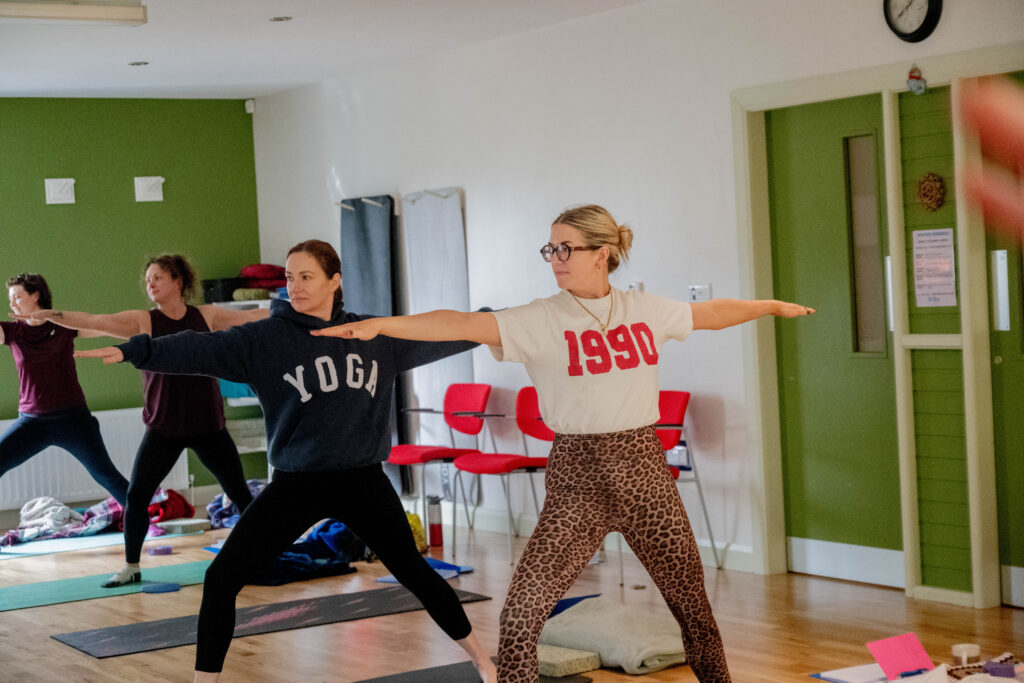
Yoga hatha is a traditional style of yoga that combines physical postures, controlled breathing, and short periods of meditation. Classes move at a steady, unhurried pace. Each pose is held for several breaths, making yoga hatha the most accessible entry point for people new to yoga of any age or fitness level.
| What | Details |
|---|---|
| Style | Yoga hatha: postures, breathwork, relaxation |
| Class length | 60 to 75 minutes (some 90-min deep-practice classes) |
| Price at Orba | From £54 | View all yoga classes |
| Who it is for | Complete beginners, all ages, all body types |
| Styles covered | Hatha, vinyasa, yin, restorative |
| Location | Orba Yoga Retreat & Health Spa, Omagh, Co. Tyrone |
What Is Hatha Yoga?
The term hatha comes from two Sanskrit words: ha, meaning sun, and tha, meaning moon. Together they represent the balance of opposing forces within the body, strength and flexibility, effort and ease, activity and stillness. That balance is the central aim of yoga hatha practice.
Hatha yoga originated in 15th-century India as a system for preparing the body and mind for deeper meditation. The foundational text, the Hatha Yoga Pradipika, outlines 84 asanas, breathing techniques, and purification practices designed to create physical and mental stability. Today, the term hatha describes any yoga class that teaches physical postures at a steady, non-flow pace.
In the UK, yoga hatha is the most commonly taught style. A 2023 survey by Sport England found that yoga participation among adults aged 16 and over grew by 18% over the previous five years, with hatha-based classes accounting for the majority of sessions taken by new practitioners.
Unlike more dynamic styles, hatha classes pause between postures. You settle into a shape, breathe through it, and move on when you are ready. This structure means students develop a clear understanding of alignment and breath from their very first session, building a strong foundation for any other yoga style they choose to explore later.
At Orba Yoga Retreat & Health Spa in Omagh, Brídín has been teaching this practice since 2012. Her classes draw on classical hatha foundations while staying accessible, practical, and relevant to modern lives in Co. Tyrone and beyond.
What Does a Yoga Hatha Class Look Like?
If you have never attended a yoga hatha class, knowing what to expect removes a lot of the uncertainty. A typical 60 to 75-minute session at Orba follows a clear four-part structure.
Breathwork (pranayama), 5 to 10 minutes. Class opens with guided breathing. You sit or lie comfortably and focus on slow, deliberate inhales and exhales. This settles the nervous system and prepares the mind for movement. Common techniques include diaphragmatic breathing and three-part breath.
Warm-up, 10 to 15 minutes. Gentle movements loosen the spine, hips, and shoulders. Cat-Cow stretches, seated twists, and neck rolls appear regularly in this phase. The goal is to raise body temperature and increase blood flow to the muscles before deeper postures begin.
Asana practice, 35 to 45 minutes. This is the main body of the class. Your teacher guides you through 15 to 25 postures, each held for 3 to 5 breaths. Alignment cues are given throughout. Props such as blocks, straps, and bolsters are available so every pose is accessible regardless of your current flexibility.
Savasana (relaxation), 10 minutes. Class ends with Savasana, lying flat on your back in complete stillness. This phase allows the nervous system to integrate the work done during practice. It is one of the most important parts of the session and should never be skipped.
You leave a well-structured class feeling calmer and more settled in your body, not exhausted. Wear comfortable clothing, bring water, and arrive 5 minutes early to introduce yourself to the teacher.

Hatha Yoga vs Vinyasa: What Is the Difference?
The most common question from beginners is whether to choose yoga hatha or vinyasa yoga. Both styles use the same foundational postures, but the pace, structure, and physical demand differ significantly.
Yoga hatha holds each pose for 3 to 5 breaths before moving on. The teacher explains alignment in detail, there is time to find your bearings, and transitions between poses are slow and deliberate. The focus is on breath awareness and body alignment above cardiovascular output.
Vinyasa yoga links postures in a continuous sequence timed to the breath, often moving on every single inhale or exhale. The pace is faster and the practice generates more heat. Vinyasa is sometimes described as moving meditation, but it requires a reasonable level of body awareness to follow safely.
For most people starting from scratch, yoga hatha is the better first choice. Once you know the names and shapes of the main postures, switching to vinyasa becomes straightforward. The table below summarises the key differences.
| Feature | Yoga Hatha | Vinyasa | Yin | Restorative |
|---|---|---|---|---|
| Pace | Slow to moderate | Moderate to fast | Very slow | Stationary |
| Pose hold time | 3 to 5 breaths | 1 breath | 3 to 5 minutes | 5 to 20 minutes |
| Main focus | Alignment, breath | Flow, strength | Deep tissue, fascia | Nervous system rest |
| Effort level | Low to moderate | Moderate to high | Low | Minimal |
| Best for | Beginners, all levels | Active practitioners | Flexibility, stress | Recovery, fatigue |
| Props used | Blocks, straps | Minimal | Blocks, straps | Bolsters, blankets |
The Health Benefits of Hatha Yoga
The evidence base for yoga hatha is well established. Both physical and psychological benefits have been documented across numerous clinical studies, and the NHS includes yoga among its recommendations for managing stress and improving musculoskeletal health.
Research finding: A peer-reviewed study in the International Journal of Yoga found that participants who practised yoga hatha for eight weeks reported a 40% reduction in self-reported anxiety scores and significant improvements in sleep quality. (Source: International Journal of Yoga, 2022)
Physical benefits of regular yoga hatha practice include:
- Increased flexibility across the hips, hamstrings, shoulders, and spine
- Improved core and postural strength from isometric holds
- Reduced chronic lower-back pain (supported by NHS guidance on yoga for back pain)
- Better balance and proprioception, reducing fall risk in older adults
- Lowered resting heart rate and blood pressure with consistent practice
Research finding: A 2021 systematic review in PLOS ONE analysing 17 randomised controlled trials found that yoga interventions, the majority using hatha-based protocols, produced meaningful reductions in lower-back pain intensity compared with no treatment or passive care. (Source: PLOS ONE, 2021)
Mental health benefits include:
- Reduced cortisol levels after a single 60-minute session
- Greater present-moment awareness and improved concentration
- Relief from mild to moderate symptoms of anxiety and depression
- A measurable improvement in overall mood, often reported from the very first class
These benefits compound over time. Most practitioners notice meaningful changes in flexibility and stress levels within four to six weeks of weekly practice.
Is Yoga Hatha Good for Complete Beginners?
Yes, without question. Yoga hatha is the most widely recommended style for anyone starting their yoga practice from scratch, and for good reason.
Because poses are held rather than flowed through, beginners have time to listen to the teacher’s alignment cues, adjust their position, and actually feel what each posture is doing in their body. There is no pressure to keep pace with an experienced neighbour. You move at your own speed.
Props are a standard part of hatha practice. Blocks bring the floor closer to your hands. Straps extend your reach. Bolsters and folded blankets make seated postures comfortable for people with tight hips or limited flexibility. A good teacher uses props as tools, not as indicators of ability.
There are no flexibility requirements, no minimum fitness level, and no prior experience needed. Whether you are 25 or 75, returning after injury, managing a health condition, or simply new to exercise, yoga hatha offers a genuinely welcoming entry point. At Orba, Brídín teaches students from their very first posture and adapts every class to the people in the room.
6 Common Hatha Yoga Poses Explained
Most hatha classes build around a core set of foundational postures. Here are six poses you will almost certainly encounter in your first few sessions, with a brief description of each.
1. Mountain Pose (Tadasana)
Mountain Pose is the starting point for nearly all standing hatha postures. You stand with feet together or hip-width apart, weight evenly distributed, spine lengthened, and arms at your sides. It trains postural awareness and teaches you to feel your foundation before moving into more complex shapes.
2. Downward-Facing Dog (Adho Mukha Svanasana)
Downward Dog is one of the most recognised poses in yoga hatha and appears in almost every class. You form an inverted V-shape with hands pressing into the mat, hips lifting, and heels pressing toward the floor. It lengthens the hamstrings, calves, and spine while building shoulder and arm strength.
3. Warrior I (Virabhadrasana I)
Warrior I is a standing lunge with both arms raised overhead. One foot steps forward, the knee bends to roughly 90 degrees, and the back foot plants at a 45-degree angle. It builds strength in the legs and hips, opens the chest and hip flexors, and develops stability in the lower body.
4. Child’s Pose (Balasana)
Child’s Pose is the primary resting posture in hatha practice. You kneel, lower your hips toward your heels, and stretch your arms forward on the mat with your forehead down. Teachers offer it any time you need a break, and it provides a gentle stretch for the lower back, hips, and thighs.
5. Tree Pose (Vrksasana)
Tree Pose introduces balance work into class. You stand on one leg and place the sole of the opposite foot on the inner calf or inner thigh, bringing hands together at the chest or lifting them overhead. It builds concentration and strengthens the standing leg, ankle, and core.
6. Bridge Pose (Setu Bandha Sarvangasana)
Bridge Pose is performed lying on your back with knees bent, feet flat on the mat, and hips lifted toward the ceiling. It strengthens the glutes, hamstrings, and lower back while opening the chest and front of the hips. Bridge Pose is particularly beneficial for people who sit at a desk for most of the day.
Hatha Yoga Classes at Orba in Omagh
Orba Yoga Retreat & Health Spa is based in Omagh, Co. Tyrone. Brídín founded Orba in 2012 and has taught yoga hatha to hundreds of students across Northern Ireland, from complete beginners attending their very first class to experienced practitioners deepening an established practice.
Classes at Orba are deliberately small, so every student receives personal attention. Brídín adapts each session to the people in the room, adjusting postures, offering hands-on guidance, and providing modifications that keep every student progressing safely.
Yoga hatha classes at Orba start from £54. Sessions are available for beginners, mixed ability, and those with specific health goals such as stress management, back care, or improved flexibility. Orba also offers yoga retreats, spa treatments, and wellness programmes throughout the year.
If you are in Co. Tyrone or the wider Northern Ireland area and want to try yoga hatha with an experienced, supportive teacher, Orba is a welcoming place to start.
Ready to Try a Yoga Hatha Class?
Small classes, expert guidance, all levels welcome. Hatha yoga at Orba, Omagh from £54.View Classes & Book
Frequently Asked Questions About Yoga Hatha
What is yoga hatha?
Yoga hatha is a branch of yoga that uses physical postures, breathing techniques, and meditation to build strength, flexibility, and mental focus. Classes move at a steady, accessible pace, making yoga hatha one of the most suitable styles for beginners and anyone returning to exercise after a break.
How long is a hatha yoga class?
A standard hatha yoga class runs for 60 to 75 minutes. The session typically includes 5 to 10 minutes of breathwork, 40 to 50 minutes of posture practice, and a 10-minute relaxation period called Savasana. Some studios also offer 90-minute deep-practice sessions for more experienced students.
Is hatha yoga good for complete beginners?
Yes. Hatha yoga is widely recommended as the best starting point for beginners. Poses are held for several breaths rather than linked in a fast flow, giving new students time to learn alignment. No prior fitness or flexibility is required, and most teachers offer props and modifications throughout the class.
What is the difference between hatha and vinyasa yoga?
Yoga hatha holds each pose for 3 to 5 breaths at a calm pace, prioritising alignment and breath awareness. Vinyasa yoga links postures in a continuous, flowing sequence timed to the breath and moves at a faster pace. Hatha is generally better for beginners; vinyasa suits those seeking a cardiovascular element.
What are the main benefits of hatha yoga?
Regular hatha yoga practice improves flexibility, core strength, and posture. Research published in the International Journal of Yoga found significant reductions in anxiety and stress after eight weeks of hatha practice. Studies also link it to better sleep quality and reduced lower-back pain in adults of all ages.
How many poses are in hatha yoga?
Classical hatha yoga texts describe 84 key asanas, though modern classes typically practise 15 to 30 poses per session. Beginners usually start with foundational postures such as Mountain Pose, Downward Dog, Warrior I, Child’s Pose, Tree Pose, and Bridge Pose before moving to more complex shapes.
Do I need to be flexible to start hatha yoga?
No. Flexibility is not a prerequisite for yoga hatha; it is one of the outcomes. Every posture can be modified using blocks, straps, and blankets so that beginners practise safely from day one. Students with very limited flexibility often see the greatest improvement over the first four to six weeks of regular practice.
How often should I practise hatha yoga to see results?
One class per week produces noticeable improvements in flexibility and stress levels within four to six weeks for most beginners. Two sessions per week accelerates physical progress and consolidates the breathing techniques more quickly. Even a single weekly yoga hatha session provides meaningful mental and physical health benefits over time.
About the author: Brídín is the founder of Orba Yoga Retreat & Health Spa in Omagh, Co. Tyrone. She has been teaching yoga hatha and allied disciplines since 2012 and holds advanced qualifications in yoga, meditation, and breathwork.
References: NHS (2024) Guide to yoga. International Journal of Yoga (2022): Hatha yoga and anxiety outcomes. PLOS ONE (2021): Systematic review of yoga for low-back pain.