What are the benefits of massage? The benefits of massage are mostly about relaxation and recovery. A good massage eases tight muscles, calms a busy mind, improves how freely you move, and helps you sleep and unwind. It supports general wellbeing rather than curing anything, and most people simply leave feeling looser, calmer, and lighter.
Massage is one of the oldest and simplest ways to feel better in your own body. You lie down, someone works skilfully on tired muscles, and an hour later the world feels a little softer. This guide is an honest look at what massage really helps with, what it does not, and what to expect if you book your first treatment. It is written from real experience at our spa in Omagh, Co. Tyrone, where our therapists see the same quiet changes in people week after week.
The Main Benefits of Massage at a Glance
Before we go deeper, here is the short version. These are the changes people notice most often after a treatment, and none of them require you to be an athlete or a regular. A single session is enough to feel several of them.
- Less muscle tension: tight shoulders, a stiff neck, and a knotted lower back tend to ease as the muscles warm and release.
- A calmer mind: slow, steady pressure and a quiet room help the nervous system settle, so stress loosens its grip.
- Better movement: when tight muscles let go, joints feel freer and everyday movement, like turning your head or bending down, comes more easily.
- Easier sleep: many people find they sleep more deeply on the night of a massage, once the body has properly relaxed.
- A moment that is yours: an hour with no phone, no jobs, and no rush is a real part of why the benefits of massage feel so restorative.
None of this is dramatic, and that is the point. Massage is a gentle, reliable reset rather than a cure. Understood that way, it is one of the easiest things you can do for your own wellbeing.
The Health Benefits of Massage, Explained
What are the health benefits of massage? The health benefits of massage centre on relaxation, muscle recovery, and stress relief. Working on soft tissue can ease tension, improve local circulation, and lower the sense of being wound up, which helps you feel calmer and move more comfortably. These are wellbeing benefits, not medical treatment.
It helps to be clear about the size of the effect. Massage is not medicine, and it does not cure, treat, or heal illness or injury. What it does well is support the everyday things that make you feel human again: it releases tight muscles, quiets a racing head, and gives your body an hour to switch out of go mode. For most people that is exactly what they are missing, and it is why the health benefits of massage are worth taking seriously even though they are gentle.
The wider habit of looking after your body is well supported too. The NHS on the health benefits of exercise explains how regular movement and stress relief support your mood, your sleep, and your long-term health. A regular massage sits neatly alongside gentle exercise as part of that same picture of steady self-care, rather than as a treatment for any single problem.
The benefits of massage therapy for stress and tension
The benefits of massage therapy show up most clearly with stress. Modern life keeps a lot of us slightly braced: shoulders up, jaw tight, breath shallow. Skilled, unhurried touch tells the body it is safe to let go. Over an hour the breathing slows, the shoulders drop, and the low hum of tension quietens. People often say the change lasts well into the next day.
There is a physical side to this as well. When a therapist works along a tight band of muscle, the fibres warm and soften, and the area that felt hard and sore starts to feel like normal tissue again. That release is a large part of why the benefits of massage therapy feel so immediate. You are not imagining it, and you do not need a diagnosis to deserve it.
Which Massage Is Right for You? Our Menu and Prices
Different treatments suit different needs, and choosing is easier than it looks. A short focused treatment is perfect for a stubborn area, while a full body massage is better when you just want to switch off completely. Here is our current massage menu at Orba, with real prices, so you can see what fits.
| Treatment | Price | Good for |
|---|---|---|
| Back Massage | £40 | A tight back, neck, and shoulders in a focused session |
| Full Body Massage | £60 | All-over relaxation and switching off completely |
| Thai Yoga Massage | £60 | Gentle assisted stretching and freer movement |
| Reflexology | £60 | Deep calm through pressure work on the feet |
| Indian Head Massage | £60 | Head, neck, and shoulder tension and mental fog |
| Pre-Natal Massage | £60 | Comfort and relaxation during pregnancy |
| Extended Massage (90 min) | £85 | A longer, unhurried treatment with more time per area |
| Couples Massage | £120 | Relaxing together, side by side |
If you are not sure which to pick, start with a Back Massage for a specific ache or a Full Body Massage for a proper unwind. Our therapists will always ask what you want from the hour and adjust the pressure to suit you. You can see the full range on our massage and treatments in Omagh page.
The Benefits of Regular Massage
Do the benefits of regular massage add up over time? Yes, in a quiet, cumulative way. A single treatment feels lovely for a day or two, but booking one every few weeks keeps tension from building back to its old level. People who come regularly tend to hold less stress in their shoulders and recover more easily from busy or physical weeks.
The benefits of regular massage are as much about rhythm as anything physical. When a treatment is in the diary, you have a fixed point in the month that is calm and just for you. That alone changes how the weeks feel. Think of it the way you might think of regular exercise or a good sleep routine: the value is in the steady habit, not in one heroic session.
- Tension stays lower: regular sessions stop stiffness building up to the point where it aches.
- You recover quicker: after a physical week, muscles that get regular attention tend to loosen sooner.
- You notice yourself: coming back often makes you more aware of where you hold stress, so you can catch it earlier.
- A protected pause: a standing appointment gives you permission to stop, which is rarer and more valuable than it sounds.
You do not need to commit to a strict schedule to feel this. Even once every four to six weeks is enough for most people to notice the difference between a body that gets looked after and one that does not.
What to Expect at Your First Massage
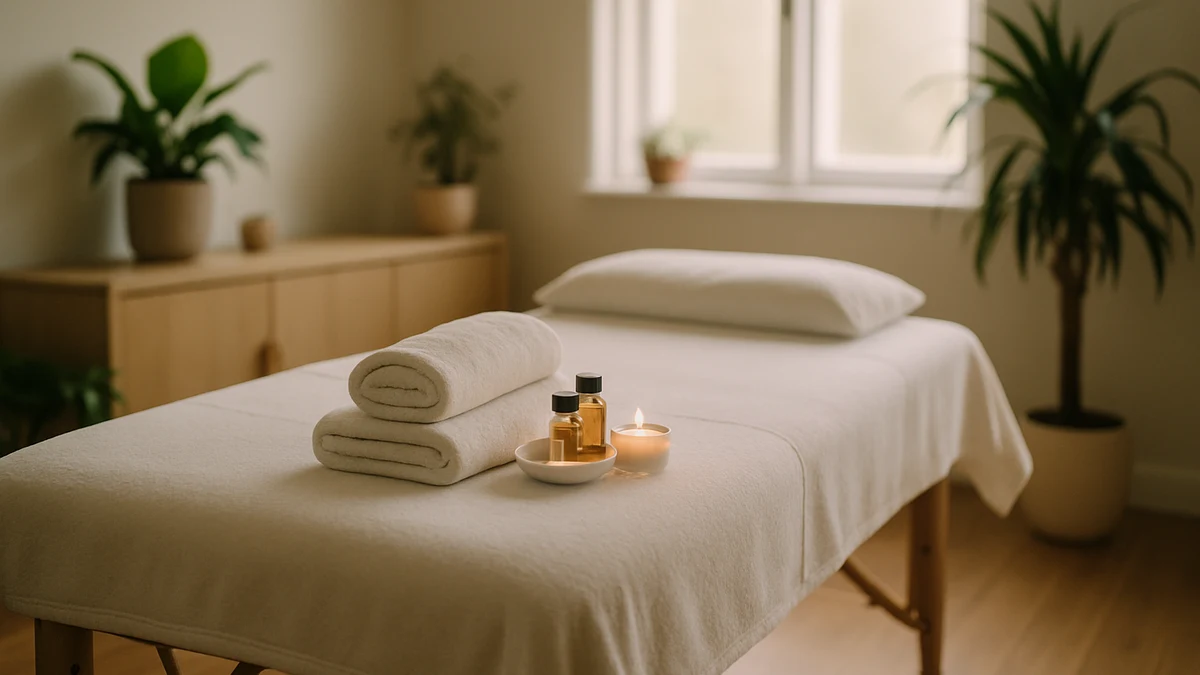
What happens during a first massage? Your therapist begins with a short, friendly chat about how you feel, any sore spots, and what you want from the session. You then lie on a warm, towel-draped couch in a quiet room, and the treatment works at a pace that suits you. You stay comfortable and covered throughout.
If it is all new to you, a few simple things help. Arrive a little early so you are not rushing in flustered. Wear clothes that are easy to change out of. Speak up during the treatment if you want more or less pressure, because a good therapist wants that feedback. Afterwards, drink some water and give yourself a few unhurried minutes before you drive off or dive back into the day.
At Orba, your treatment happens in a calm room in roughly nine acres of countryside at the foot of the Sperrin Mountains, a short drive from Omagh town centre. The setting does a lot of the work. It is far easier to let go when the surroundings are quiet, warm, and unhurried, and that calm is a genuine part of the experience. You can read more about the spa and our team before you visit, or browse our wider spa and treatments if you want to make a half day of it.
Massage During Pregnancy: A Gentle Note
Massage during pregnancy can be a lovely comfort, and our Pre-Natal Massage is designed with expectant mothers in mind. It focuses on gentle, supported relaxation rather than deep or intense work. Before you book, please check with your midwife or GP first, and tell your therapist your stage of pregnancy so the session can be adapted safely for you.
The same honesty applies here as everywhere on this page. A pregnancy massage is offered for comfort and relaxation, not as medical care, and it is not a substitute for the advice of your midwife or doctor. If you have any medical condition, an injury, or you feel unwell, it is always sensible to get professional advice before a treatment. For a plain, well-sourced overview, the NCCIH guide on massage therapy is a reliable place to read more.
How Often Should You Get a Massage?
How often should you get a massage? For general wellbeing, once every four to six weeks suits most people. If you carry a lot of tension, are training hard, or are going through a stressful stretch, every two to three weeks can help more. Listen to your body, and let how you feel guide the timing.
There is no single right answer, and you do not have to decide it all at once. Many people start with one treatment to see how they feel, then settle into a rhythm that fits their life and budget. A Back Massage every few weeks and a longer full body treatment now and then is a common, sustainable pattern. The best schedule is simply the one you will actually keep.
Benefits of Massage: Frequently Asked Questions
What are the main benefits of massage?
The main benefits of massage are relaxation, muscle recovery, and stress relief. A treatment eases tight muscles, helps you move more freely, calms a busy mind, and often improves sleep. Massage supports general wellbeing rather than treating a medical condition, and most people simply leave feeling looser, calmer, and better rested.
Is massage actually good for you?
For most people, yes. The health benefits of massage include lower muscle tension, better relaxation, and a real sense of stress relief. It is a gentle, restorative habit rather than a cure. If you have a medical condition, an injury, or you are pregnant, check with your GP or midwife before booking so your therapist can adapt the treatment safely.
How often should I get a massage?
Once every four to six weeks suits most people for general wellbeing, while every two to three weeks can help during busy or physical periods. The benefits of regular massage build up gently over time, so a steady rhythm matters more than the occasional one-off. Start with one treatment and settle into a pattern that fits your life.
Which massage should I choose first?
If you have a specific ache, start with a Back Massage (£40), which focuses on the neck, shoulders, and back. If you want to switch off completely, a Full Body Massage (£60) is the easy choice. Not sure? Tell us what you want from the hour when you book, and our therapist will guide you and adjust the pressure to suit you.
Is massage safe during pregnancy?
Our Pre-Natal Massage (£60) is designed for expectant mothers and focuses on gentle, supported relaxation. Please check with your midwife or GP first, and tell your therapist your stage of pregnancy so the session can be adapted for you. It is offered for comfort and relaxation, not as medical treatment, and is never a substitute for professional advice.
Related reading
- Reflexology Massage: What It Is and What to Expect at Orba
- Indian Head Massage Benefits: An Honest Guide
- Reflexology in Pregnancy: Is It Safe? An Honest Guide
- Is Thai Massage Dangerous? An Honest, Balanced Guide
Book a Massage at Orba in Omagh
Ready to feel the difference for yourself? At Orba Yoga Retreat & Health Spa in Omagh, Co. Tyrone, our qualified therapists offer a full menu of treatments in a calm countryside setting. Explore our massage and treatments in Omagh, then pick a time that suits you.
Treatments from £40 · Mon to Sat · Omagh, Co. Tyrone
Call 07596 592117 or email namaste@orbayogaspa.com to book your treatment. You can also check the current class and session timetable.
About the author
Brídín is the owner of Orba Yoga Retreat & Health Spa in Omagh, Co. Tyrone, where she has run yoga, Pilates, spa, and massage under one roof since 2012. She and the Orba team look after guests in a calm studio and spa set in roughly nine acres of countryside at the foot of the Sperrin Mountains, with everything you need provided.
Ready to begin? Book a class or a treatment, or ask a question, by calling 07596 592117 or emailing namaste@orbayogaspa.com.