Is reformer pilates for beginners the best way to start? Not necessarily. Reformer pilates is genuine, effective pilates done on a spring-loaded machine, and it suits some goals well. The honest headline is that the research does not show it beats simple mat work for most first-timers. For a lot of people, a mat class is cheaper, easier to find, and just as good a foundation.
This guide explains reformer pilates for beginners in plain terms. It covers what the machine actually does, how reformer compares with mat work on cost and access, and what a first class is really like. It is written from a mat pilates studio here in Omagh, so you get a straight answer rather than a sales pitch. If you are weighing up where to begin, this is the practical picture.
| Quick question | Short answer |
|---|---|
| Is reformer better than mat? | Not clearly, for a general beginner. Both build core control and confidence. |
| Which is cheaper? | Mat, usually by a wide margin. |
| Which is easier to find near Omagh? | Mat classes, by far. |
| Where does Orba fit? | We teach mat pilates (“Pilates for All”), from £54. We do not run reformer. |
What Is Reformer Pilates, and What Does the Machine Do?
So, what is reformer pilates? It is pilates performed on a piece of equipment called a reformer. The reformer is a padded platform, the carriage, that slides back and forth on rails against spring resistance. You lie, sit, kneel or stand on it and move the carriage in a slow, controlled way. It is still pilates at heart: breathing, core control and precise movement stay at the centre.
The machine has four main parts, and each one changes how an exercise feels:
- The carriage: the moving platform you work on. It glides on rails, so almost every exercise asks your core to control the slide.
- The springs: these set the resistance. Heavier springs make the carriage harder to move; lighter springs assist you. Your teacher usually picks them for you at first.
- The footbar: a fixed bar at one end for your feet or hands during many moves.
- The straps and ropes: held by hands or feet for arm, leg and trunk work.
The clever part is the springs. A teacher can load or support a movement in a very fine-tuned way. That makes the reformer handy for teaching alignment and for graded strength work, where you build up gradually. It is a good tool. It is not magic, and it is not the only way to learn pilates well.
Reformer vs Mat Pilates: An Honest Comparison
The reformer vs mat pilates question usually comes down to cost, access and what you want out of it. Mat pilates uses your bodyweight on a mat, sometimes with a band, ball or block. Reformer pilates uses the machine and a studio that owns several of them. Here is how the two stack up.
| What matters | Reformer pilates | Mat pilates |
|---|---|---|
| Equipment | Reformer machine, studio space, often grip socks | Just a mat; sometimes a band, ball or block |
| Typical UK class cost | About £20 to £35 a class (higher in cities) | About £10 to £25 a class, often less locally |
| Access near you | Specialist studios only, fewer of them, smaller classes | Widely available in studios, halls, gyms and online |
| Best for | Graded resistance, supported movement, rehab-style progression, people who enjoy equipment | Low-cost entry, home practice, body awareness, a solid all-round start |
| Main limitation | Costs more and is harder to find; the machine can feel daunting at first | Less external resistance, so progress leans on your own control |
What each one costs
Current UK studio pricing guides for 2026 point the same way. Group reformer classes tend to run around £20 to £35 each, and higher in big cities. Mat classes usually sit around £10 to £25, and community sessions can be cheaper again. Reformer is the pricier, less available option before you even add grip socks or a longer drive to a specialist studio. That gap matters most when you are just starting and want to build a steady, once-a-week habit.
Is Reformer Pilates for Beginners Actually Better?
Here is the direct answer. For a general beginner, reformer pilates for beginners is not clearly better than mat pilates. The evidence does not favour the machine over the mat for most healthy first-timers. What tends to matter far more is the teacher, the programming, how often you go, and how well you keep the habit.
Reformer pilates benefits, honestly
The reformer pilates benefits people talk about are real, but they are shared with mat work rather than unique to the machine. Pilates in general can help build core strength, better body awareness and steadier balance. For long-term low back pain, the NHS lists pilates among the exercise approaches that can help, usually as part of a wider plan rather than a stand-alone fix. You can see its guide to pilates and yoga for the honest version.
Where the machine earns its place is control. Two honest points stand out from the research and from teaching:
- Supported movement: springs can assist a move, so someone with low starting strength can work through a fuller range with help. That suits gentle, graded rehab.
- Fine-tuned load: a teacher can nudge resistance up or down quickly, which some people find motivating.
But most reviews pool different pilates styles together, so clean reformer-versus-mat comparisons are thin and mixed. No strong body of evidence says a beginner needs the reformer to make progress. If you have back pain, a recent injury, or you are pregnant, that is a moment to be sensible. Have a quick word with your GP or a physiotherapist first, pick a suitably experienced teacher, and tell them before class. The NHS has a gentle back-pain pilates video if you want to try something at home first.
What a Reformer Pilates Class Is Generally Like
A first reformer class is more structured than a typical mat class. There is a machine to learn, so expect a slower pace and plenty of setup. Most studios ask beginners to book a starter session before joining mixed-level classes. Here is the shape of a usual first visit:
- Booking: many studios require an intro or beginner class first, so you learn the basics safely.
- Class size: often small, commonly four to eight people, so the teacher can watch you closely.
- Grip socks: usually required, for hygiene and for traction on the carriage.
- Spring settings: the teacher sets these for you at first. Beginners often start light to moderate.
- Pacing: slow and steady, with pauses to change springs and check your position.
Nerves are normal. Most first-timers worry about doing it wrong, feeling wobbly, or not understanding the machine. A good teacher expects all of that and talks you through each move. Within a class or two, the setup stops feeling strange. None of this, though, is something mat work cannot also teach you. For a lot of people, that is the quiet case for treating reformer pilates for beginners as a later step rather than a first one.
Who Reformer Pilates for Beginners Actually Suits
Reformer pilates for beginners is not a wrong choice. For some people it is a genuinely good one. The machine shines when you want support and fine control, so a few groups get real value from starting there:
- Rehab and recovery: if you are rebuilding after injury or surgery, the springs can assist a movement you could not yet do unaided. That graded support is where reformer pilates for beginners can be worth the extra cost, ideally alongside advice from a physiotherapist.
- Specific strength goals: people who like measurable, adjustable resistance often enjoy the machine and stay consistent because of it.
- Confidence with equipment: some beginners feel steadier working against a frame than on a bare mat, and that comfort helps them turn up each week.
For everyone else, the honest verdict holds. A general beginner does not need reformer pilates for beginners to build strong foundations. Mat work covers the same ground for less money and far less hassle. If the machine appeals and you can find a good local studio, try it. If not, you are missing nothing essential.
Why Mat Pilates Is a Great Place to Start (and What Orba Offers)
For most people, mat pilates is the sensible first step, and reformer pilates for beginners can wait until you know you love the method. Mat work teaches the same core skills: breathing, control, alignment and precision. It costs less, it travels with you, and you can practise at home with nothing but a mat. You build a real foundation, and if you later fancy trying a reformer, you will bring good habits to it. Think of reformer pilates for beginners as an optional upgrade, not the entry ticket.
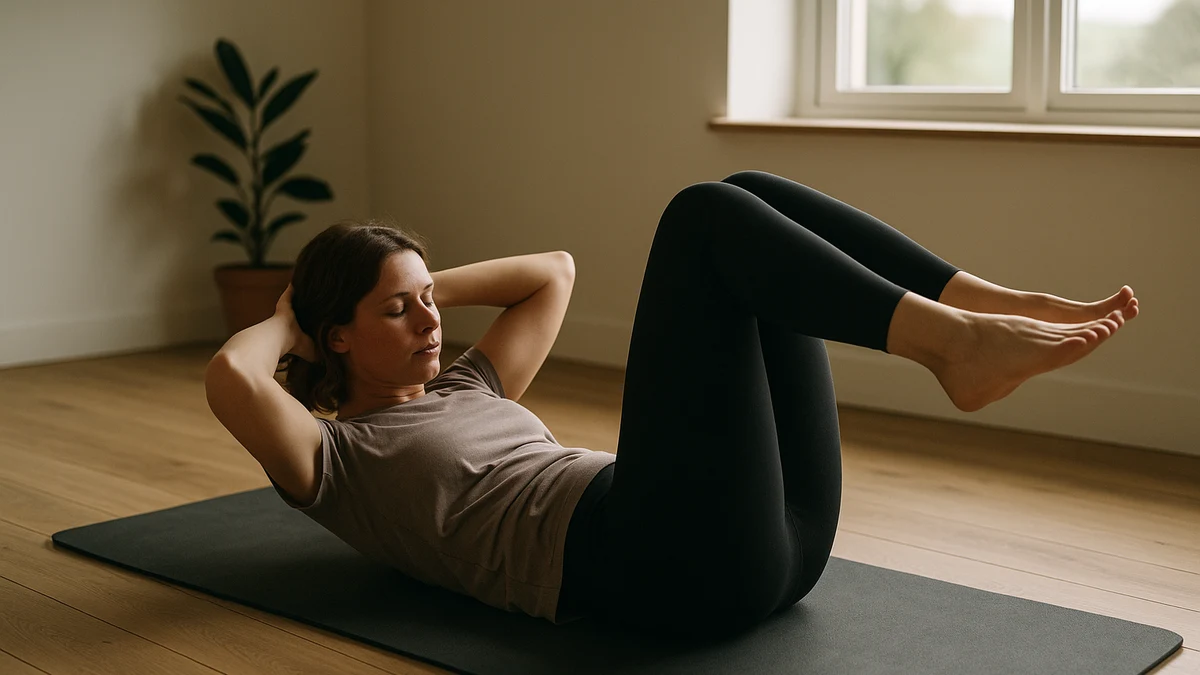
To be straight with you, Orba teaches mat pilates only. Our “Pilates for All” class runs from £54, in small groups, with hands-on guidance from Brídín, who has taught here since 2012. We do not have a reformer, and we will never pretend otherwise. What we do offer is a calm, unhurried place to learn the basics properly, in about nine acres of countryside at the foot of the Sperrins, just outside Omagh.
If that sounds like the right starting point, take a look at our mat pilates classes in Omagh, check the current class timetable to find a slot that suits you, or read more about the studio and the setting before you visit. Start on the mat, get the foundations solid, and the rest can follow at your own pace.
Reformer Pilates for Beginners: Common Questions
Should a complete beginner start on reformer or mat?
For most complete beginners, mat pilates is the better first step. It is cheaper, easier to find, and teaches the same core skills. Reformer suits you later, or sooner if you specifically want supported, graded resistance for rehab. Neither one is a wrong choice, but mat is the simpler place to build the habit.
Is reformer pilates harder than mat pilates?
Not exactly. Reformer can be made easier or harder by changing the springs, so it flexes to your level. Mat pilates can feel surprisingly tough because you rely on your own control. Both can challenge a beginner. The difficulty depends more on the class and the teacher than on the equipment itself.
How much does reformer pilates cost in the UK?
Group reformer classes usually cost around £20 to £35 each, and more in large cities. Mat classes tend to run about £10 to £25, and community sessions can be cheaper. Add grip socks and travel to a specialist studio, and reformer becomes the pricier way to start pilates.
Do the reformer pilates benefits beat mat pilates?
The evidence does not clearly say so for a general beginner. Both formats can improve core strength, posture and balance. Most studies group pilates styles together, so head-to-head proof is limited. What moves the needle most is going regularly and having a good teacher, not the machine.
Does Orba offer reformer pilates?
No. Orba teaches mat-based pilates only, through our “Pilates for All” class from £54. We do not run a reformer. If you want a calm, welcoming place near Omagh to learn the foundations of pilates properly, our mat classes are a genuine and affordable way to begin.
Related reading
- Pilates for Beginners Over 50: An Honest, Gentle Guide
- Pilates Before and After: What Results to Realistically Expect
- Pilates for Back Pain: A Gentle, Practical Guide
- Pilates for Beginners: What to Expect in Your First Mat Class
Start Pilates the Simple Way at Orba in Omagh
You do not need a reformer to learn pilates well. At Orba Yoga Retreat & Health Spa in Omagh, Co. Tyrone, our mat-based “Pilates for All” class teaches the core skills in small groups, with real feedback from Brídín, who has taught here since 2012. It is a calm, affordable place to build a foundation you can carry anywhere.
Pilates for All from £54 · Small groups · Omagh, Co. Tyrone
Call 07596 592117 or email namaste@orbayogaspa.com to book your first class.