What is a wellness retreat? A wellness retreat is a short, structured break, usually a day, a weekend or a few nights, where the whole point is to step back from daily stress and follow a gentle plan of activities that support how you feel. Think yoga, quiet time in nature, spa or thermal facilities, simple food and a slower pace. It is less about sightseeing or luxury for its own sake, and more about rest, reflection and healthier habits.
This is an honest explainer for anyone weighing up a wellness retreat for the first time. I run one here at the foot of the Sperrin Mountains near Omagh, so I will keep it plain and practical rather than dreamy. You will see what a wellness retreat actually is, what is usually included, the main types on offer, how to pick one that suits you, what to pack, and a fair look at whether it is worth the money. Where a wellbeing claim needs backing up, I have linked the source. There is no official UK definition of the term, so treat it as a description, not a promise.
What a Wellness Retreat Actually Is
A wellness retreat is a stay or a day visit built around planned activities that support your physical and mental wellbeing. The focus is calm, movement, rest and healthier routines, not entertainment. That focus, and a set timetable, is what separates it from a spa break or a normal holiday.
People often ask what is a wellness retreat compared with the spa day they already know. The simplest way to see it is by intent. Here is how the three usually differ:
- Wellness retreat: the main goal is wellbeing. There is a light programme, often morning movement, an afternoon walk and an evening wind-down, so you leave with a calmer head and a habit or two.
- Spa break: the main goal is relaxation and treatments. You book a massage or a facial, use the sauna, and there is rarely a set schedule or group activity.
- Holiday: the main goal is time off and enjoyment. Content depends on where you go, and it may involve no health focus at all.
None of these is better than the others. They just do different jobs. If you want to switch off and be looked after, a spa break is lovely. If you want a reset that leaves you with tools you can use at home, a wellness retreat is the closer fit. Many people book a retreat at a turning point: a stressful stretch at work, a big birthday, or simply the sense that the pace has crept up. You do not need a crisis to justify one. A quiet day to reset is reason enough.
What Is Usually Included
No two places are identical, and a wellness retreat can run for a single day or across several nights. Most build the day around the same core parts. The table below shows what to expect and roughly how long each piece tends to take.
| What is included | What it usually means | Typical time |
|---|---|---|
| Movement | Yoga, Pilates, stretching, breathwork or a guided walk, suitable for beginners | 60 to 90 min per session |
| Spa and thermal | Sauna, steam, hot tub or a relaxation lounge, used between activities | 1 to 2 hrs |
| Nature time | Walks, outdoor practice or quiet time in gardens and woodland | 30 to 60 min |
| Meals | Simple, balanced food, often with plant-based or dietary options | 2 to 3 per day |
| Workshops | Short sessions on stress, sleep, breathing or mindfulness | 45 to 60 min |
| Rest | Built-in downtime with no schedule, which is the point, not a gap | Open |
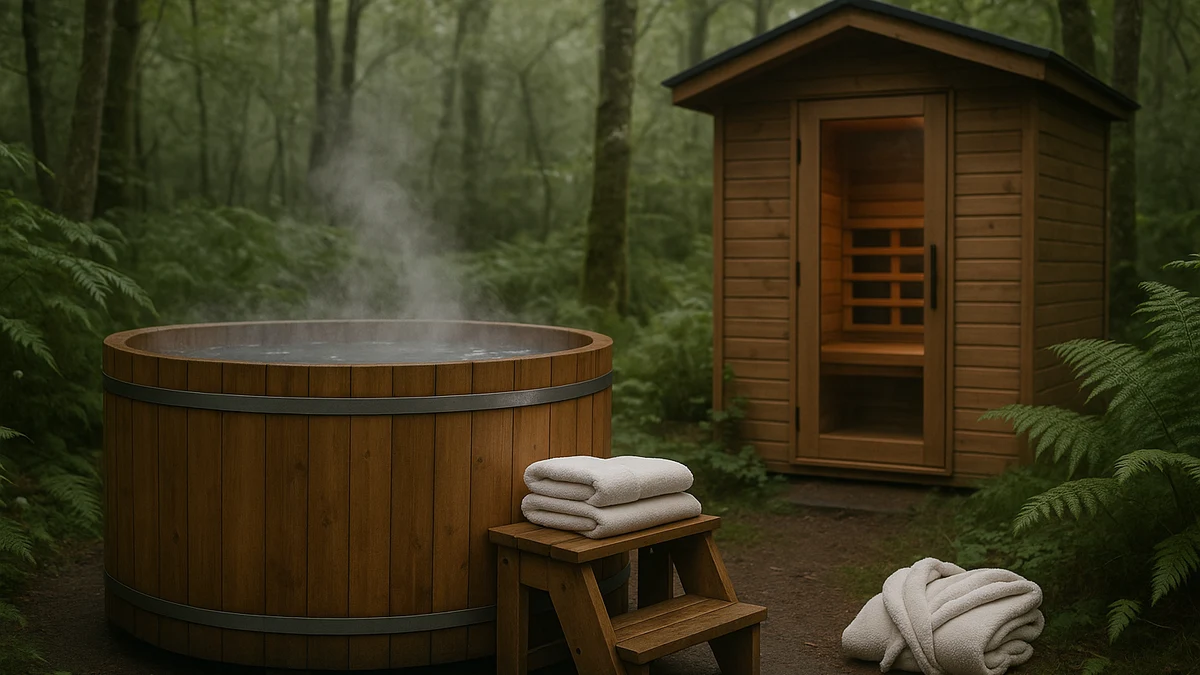
The setting does a lot of the work. Ours sits in roughly 9 acres of countryside, with an outdoor yoga shala, a forest hot tub, an infrared sauna and a nature trail. That mix, movement outdoors then warmth and stillness, is a common shape for a good day. You can see how we put it together on our about the retreat page.
Types of Wellness Retreat
The phrase covers a wide range, so it helps to know the main types before you book. Any wellness retreat UK visitors find will usually fall into one of these, and many mix two or three together.
- Yoga retreats: movement and breath are the anchor, with classes suited to all levels. Good for stress and for building a steady practice.
- Spa and relaxation: the focus is thermal facilities and treatments, with light activity around them.
- Meditation or silent: quieter days built around stillness and mindfulness, sometimes with limited talking.
- Nature-based: walking, forest time and outdoor practice, using the local landscape.
- Detox or reset: stricter food and routines. Read the small print here, and be wary of any big health claims.
- Women’s or small-group: a smaller, more personal setting, often blending yoga, spa and rest.
Where a place like Orba fits
We sit across a few of these on purpose. Yoga and Pilates are the movement core, the forest hot tub and infrared sauna cover the spa side, and the grounds bring the nature part. You can come for a day or join a longer programme such as our seasonal Autumn Retreat. It means one place suits a first-timer who wants to try things and a regular who wants a proper reset.
How to Choose One That Suits You
The best retreat for you depends on what you actually want to feel afterwards. Before you pay, run through a few honest questions:
- What is the goal? A calmer head, a sore back eased, better sleep, or simply a break. Pick a type that matches, not the prettiest photos.
- Day or overnight? A day retreat is a low-cost way to test the idea. A residential stay gives deeper rest but costs and commits more.
- How full is the timetable? Some people want a packed schedule, others want space. Check the plan before you commit.
- Who is teaching? Look for named, qualified instructors and real photos of the actual place, not stock images.
- Is it beginner friendly? If you are new, a small group with all levels welcome matters more than a fancy facility.
- Any health needs? Pregnancy, injury or a medical condition can affect sauna, hot tub and stronger classes. Ask first, and see the note below.
Local matters too. A retreat an hour from home means less travel stress and an easy return visit. If you are in the north west, our class timetable is a simple way to try a session before booking a full day.
What to Pack
Most good retreats keep it simple and provide the bulky kit. Mats, blocks, blankets, robes and towels are often supplied, so check first and pack light. A useful basic list:
- Comfortable, stretchy layers you can move in, plus a warm top for after class.
- Swimwear for the hot tub or sauna, and flip-flops or slippers.
- A refillable water bottle and any personal toiletries you prefer.
- Outdoor shoes and a light waterproof, because this is Northern Ireland.
- A notebook if workshops are included, and any medication you need.
- Your phone on silent, or left in the bag, so the break is a real one.
Is It Worth It: An Honest Look
Here is the fair answer. A wellness retreat can help you feel calmer, sleep a little better and reset a stressed routine, but the effects are gentle and they build with what you keep doing at home. It is a helpful nudge, not a cure. The wellness retreat benefits worth trusting are the practical ones: a real rest, a few skills, and a break in the pattern of a busy month.
Each part has some evidence behind it, honestly framed:
| Part of a retreat | What the evidence broadly says |
|---|---|
| Relaxation and breathing | Can ease the stress response and physical tension, and bring focus back to the present (NHS, 2024) |
| Time in nature | Access to green space is linked with lower stress and better mood (Public Health England, 2020) |
| Yoga and gentle movement | A mind and body practice many use to support stress management and wellbeing (NCCIH, 2024) |
| Warmth and rest | Sauna and downtime feel restful for most people, best treated as comfort, not treatment |
The connect, be active and take notice ideas in the NHS five steps to mental wellbeing map neatly onto a good retreat day. For the calm side, the NHS and NCCIH on relaxation techniques both note that breathing and mindfulness can help counter the fight-or-flight stress response. That is a modest, real benefit, and it is the honest reason many people find a wellness retreat worthwhile.
Value comes down to fit. A day retreat is an easy, lower-cost yes if you want to test it. A longer stay is worth it when you genuinely need the space and will use the reset. If money is tight, one class plus a good walk gets you a slice of the same benefit. When you are ready to go deeper, a full day adds the warmth, the food and the switched-off feeling that a single class cannot. You can pair a session with spa time on our spa experience page, or ease in gently through yoga classes in Omagh.
If you are pregnant, managing a health condition, or recovering from injury, have a quick word with your GP or midwife before you book, especially for sauna, hot tub or stronger classes. Always tell the instructor on the day so sessions can be adapted for you.
Wellness Retreat FAQ
What is a wellness retreat in simple terms?
It is a planned break, from a day to a few nights, focused on your wellbeing rather than sightseeing. You follow a gentle schedule of movement, rest, spa or nature time and simple meals. The aim is to lower stress and pick up habits you can keep at home. There is no official UK definition, so always check the actual programme.
How is a wellness retreat different from a spa break?
A spa break centres on treatments and thermal facilities, with no set timetable. A wellness retreat adds a light programme of yoga, walks, workshops and rest, with a clearer wellbeing focus. A spa break is about being looked after. A retreat is about resetting your routine and leaving with a few practical tools.
How long does a wellness retreat last?
It varies. Many places offer a single day retreat with classes, spa use and meals but no overnight stay. Others run weekends of two to three nights, or longer breaks of three to seven nights. A day is a low-cost way to try the idea, while a residential stay gives deeper rest and a fuller reset.
Do I need to be fit or experienced to go?
No. Most retreats welcome beginners and adapt classes to all levels, with equipment provided. You do not need to be flexible or sporty to take part. If you have an injury, are pregnant, or manage a health condition, mention it when you book so sessions can be adjusted, and check with your GP first where needed.
Are the benefits of a wellness retreat real?
Yes, but keep expectations honest. Relaxation, gentle movement and time in nature can help you feel calmer and rest better, and reputable bodies like the NHS and NCCIH support that. The effects are modest and build with regular practice at home. A retreat is a genuine helpful nudge, not a cure for any medical condition.
Related reading
- Yoga Retreat UK: What to Look For Before You Book
- Yoga Retreat for Beginners: A Calm Guide for Nervous First-Timers
- Digital Detox Retreat: How to Truly Switch Off
- Weekend Wellness Retreat: An Honest Two-Day Guide
Come and See the Orba Retreat Near Omagh
Orba Yoga Retreat & Health Spa sits in roughly 9 acres at the foot of the Sperrin Mountains, with an outdoor yoga shala, a forest hot tub and an infrared sauna. Come for a single day or join our seasonal Autumn Retreat, led by Brídín, who has taught here since 2012. Small groups mean real attention, not a spot at the back of a crowded room.
9 acres · Outdoor shala, forest hot tub, infrared sauna · Omagh, Co. Tyrone
Call 07596 592117 or email namaste@orbayogaspa.com to plan your visit.