What should you look for in a yoga retreat in the UK? A good yoga retreat is a short residential stay, usually two to seven days, that mixes daily yoga with rest, good food and time outdoors. Look for clear group sizes, a stated experience level, proper rest built into the timetable, and teachers who adapt each pose. It is calmer and less strict than people expect, with far more free time than a packed schedule suggests.
This is a plain, honest guide to choosing a yoga retreat in the UK. It walks through what a day really looks like, who a retreat suits, what to pack, and how to pick a retreat you will actually enjoy — whether it is your first or your fifth. It is written from fourteen years of teaching here in Omagh, at the foot of the Sperrin Mountains, and from the questions guests ask again and again before they book. If you have never done anything like this, start here.
What a yoga retreat is really like
Forget the idea of a strict schedule and hours of hard practice. A yoga retreat is usually gentle. There are one or two yoga sessions a day, shared meals, and long gaps for rest, reading or a walk. The morning class is often the main event. The rest of the day is quieter than most guests imagine.
The point is a change of pace, not a bootcamp. You step away from your phone, your commute and your to-do list for a few days. Meals are cooked for you. You are outdoors more than usual. That combination, gentle movement plus rest plus nature, is what people mean when they say they came home feeling different.
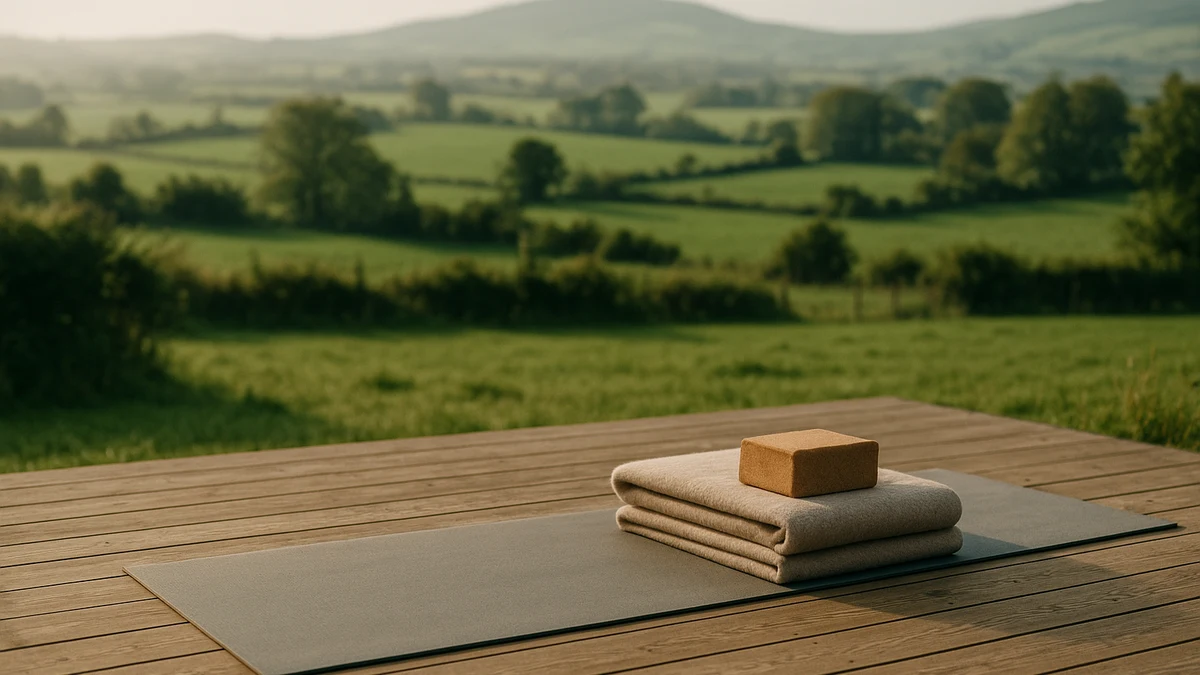
At Orba, the setting does a lot of the work. There are roughly 9 acres of countryside, an outdoor yoga shala, a forest hot tub, an infrared sauna and a nature trail. You are about two and a half miles from Omagh town, but it feels a world away from it.
The difference from a weekly class is time. A single class ends and you drive home into the same evening. A yoga retreat holds you in the calm for two or three days, so the practice, the food and the rest have room to add up. That is why people who have taken classes for years still notice something new on a retreat. The setting is not an extra. It is half the point.
Yoga retreat benefits worth knowing
Be honest with yourself about the yoga retreat benefits, because the research is cautious. According to the U.S. National Center for Complementary and Integrative Health, research suggests yoga may help people manage stress and may improve sleep in some groups, though more high-quality studies are still needed. You can read their summary in the NCCIH overview of yoga effectiveness and safety.
The setting matters too. A 2019 systematic review of nature-based recreation (Neale and colleagues) found that 90% of the 46 studies it looked at reported at least one positive link between time in nature and mental wellbeing, including better mood and lower anxiety. The honest read is simple. A few days of gentle yoga and time outdoors can help many people feel calmer and more rested, but it is a support, not a cure, and it does not replace medical care.
A sample day on a yoga retreat
Every retreat runs its own timetable, so treat this as a realistic example rather than a fixed rule. Notice how much of the day is yours. Many guests tell us the free time was their favourite part, not the classes.
| Time | What tends to happen |
|---|---|
| 07:00 | Optional wake-up: a short breathing or meditation session, about 20 minutes. Skip it and sleep in if you would rather. |
| 07:30 | Morning yoga, around 75 minutes. Usually gentle Hatha or slow Vinyasa, with props and easier options offered throughout. |
| 09:00 | Breakfast together. Unhurried, plant-forward, no rush to be anywhere. |
| 10:30 | A workshop or free time: posture basics, a plain-language talk, a nature walk, or simply reading in the garden. |
| 12:30 | Lunch, then a proper rest. |
| 14:00 | Free time. Nap, walk, use the sauna or hot tub, or do nothing at all. |
| 16:00 | Afternoon session, around 60 minutes. Often Yin or restorative, softer than the morning. |
| 18:00 | Dinner, another shared and relaxed meal. |
| 19:30 | Evening wind-down: a guided relaxation, gentle meditation, or a quiet group chat. Usually optional. |
| 21:00 | An early night. Rest is part of the plan, not a sign you missed out. |
Who a yoga retreat suits
A yoga retreat suits almost anyone who wants a few slow days and a reset. You do not need to be flexible, fit or experienced. A good yoga retreat is designed for mixed levels, with plenty of rest built in and teachers who show you how to adapt each pose. Solo guests are common, and so are couples and small groups of friends.
It tends to land well for a few groups in particular. People who feel wrung out by work often need the enforced pause more than another gym session. New parents grabbing a rare weekend want rest they can actually take. Anyone curious about yoga but nervous about a busy studio finds a small retreat gentler than a packed class. The common thread is simple: you want to slow down, and you would like some structure around it.
It is worth pausing on who should take a little extra care. If you are pregnant, recovering from injury, or managing a health condition, a retreat can still work well, but the details matter more. Choose a suitable class, tell the teacher in advance, and get the sign-off you need first.
Before you book, if you are pregnant, managing a health condition, or recovering from injury, have a quick word with your GP or midwife, and tell the retreat team, so the practice can be adapted safely for you.
What to expect on a yoga retreat
The nerves are always the same, and they are always bigger than the reality. Here is what to expect on a yoga retreat when it is your first one, and why the common worries rarely hold up:
- “I am not flexible or fit enough.” Flexibility is a result of yoga, not a requirement for it. Every pose has an easier version, and a good teacher offers it before you ask.
- “Everyone will be better than me.” Most retreat groups are mixed, and plenty of guests are also first-timers. Nobody is watching you. They are busy with their own mat.
- “I will have to be social all day.” You will not. Meals are shared, but the free time is genuinely free. Quiet, solo time is normal and respected.
- “What if I want to skip a session?” Skipping is fine. Early and evening sessions are usually optional, and resting is a valid choice, not a failure.
- “I have never meditated.” Neither had most of the room. Guided relaxation asks nothing of you except to lie down and listen.
What to bring
Pack light, but pack for the weather. Northern Ireland can give you all four seasons in a day, so layers matter more than anything fancy. Many retreats provide mats, blocks and blankets, so check first before you carry your own. At Orba, equipment is provided, along with robes, slippers and towels.
- Comfortable clothing: two or three pairs of leggings or soft joggers, and a few breathable tops you can layer.
- Warm layers: a fleece or jumper for early mornings, a light waterproof jacket, and warm socks for relaxation.
- Outdoor shoes: sturdy trainers or walking boots for countryside paths, plus something easy to slip on and off.
- Swimwear: useful if there is a hot tub or sauna, as there is here.
- A refillable water bottle and any personal toiletries you prefer.
- A book or journal: the free time is real, and many guests are glad they brought something to fill it.
- Any medication you take, clearly labelled, and a note of it for the team.
How to choose the right yoga retreat
The right retreat is not the most intense one. It is the one that says clearly who it is for, keeps groups small, and builds in rest. A few minutes of checking before you book saves a lot of second-guessing later.
Match the style to what you want. If you are after calm, look for gentle Hatha, Yin or restorative sessions rather than hot or power yoga. If travel worries you, a local retreat means less time in the car and an easy trip home if plans change. Read the daily schedule closely, and count the rest. A day that is 20% yoga and 80% space is a good sign, not a thin one.
Questions worth asking
- Is this retreat suitable for complete beginners, and are the classes mixed level?
- How many people are in a group, and who teaches the sessions?
- How much free time is there, and are any sessions optional?
- What is provided, and what should I bring myself?
- Can the practice be adapted for an injury, pregnancy or health condition?
Red flags to watch
- A schedule with no rest and back-to-back sessions from dawn to night.
- Big claims about curing or healing conditions. Honest retreats talk about feeling calmer and more rested, not miracles.
- Vague answers about who teaches, or no named instructor at all.
- Pressure to book fast with no clear description of the actual days.
If you want to build a little confidence first, a few weekly classes before a retreat can help. You can see the current class timetable, read more about Orba and the Autumn Retreat, or explore our yoga classes in Omagh to get a feel for how a session runs before you commit to a few days away.
Yoga retreat questions, answered
Do I need to be good at yoga to go on a yoga retreat?
No. A beginner-friendly retreat is designed for mixed levels, and teachers offer easier options for every pose. Flexibility and fitness build with practice, so they are never a condition of joining. Turning up willing to try is genuinely enough.
How long should my first yoga retreat be?
For a first time, a short retreat of two to three days is plenty. It gives you a full reset without a big commitment, and you can always book longer next time. Many people find a weekend is the easiest way to start.
What happens if I want to skip a session?
You rest, and that is fine. Early morning and evening sessions are usually optional, and resting is part of the point of a retreat. A good team will never make you feel you have to attend everything on the timetable.
Can I go on a yoga retreat on my own?
Yes, and many guests do. Solo travellers are common at retreats, and the shared meals make it easy to meet people without any pressure. Equally, the free time means you can keep to yourself whenever you want to.
Is a yoga retreat good for stress and sleep?
Many people find a few gentle days help them feel calmer and rest better. Research from the NCCIH suggests yoga may support stress management and sleep for some people, though more study is needed. Treat it as a helpful reset, not a medical treatment.
Related reading
- Yoga Retreat for Beginners: A Calm Guide for Nervous First-Timers
- Digital Detox Retreat: How to Truly Switch Off
- Weekend Wellness Retreat: An Honest Two-Day Guide
- Meditation Retreats: What to Expect and How to Prepare
Discover the Orba Yoga Retreat in Omagh
A few slow days can reset a busy mind, and a countryside setting makes it easier. At Orba Yoga Retreat & Health Spa in Omagh, Co. Tyrone, our Autumn Retreat sits in roughly 9 acres at the foot of the Sperrins, with an outdoor shala, a forest hot tub and an infrared sauna. Beginners are welcome, with gentle classes led by Brídín, who has taught here since 2012.
9 acres at the foot of the Sperrins · Outdoor shala, hot tub & sauna · Omagh, Co. Tyrone
Call 07596 592117 or email namaste@orbayogaspa.com to ask about the retreat or book your first class.